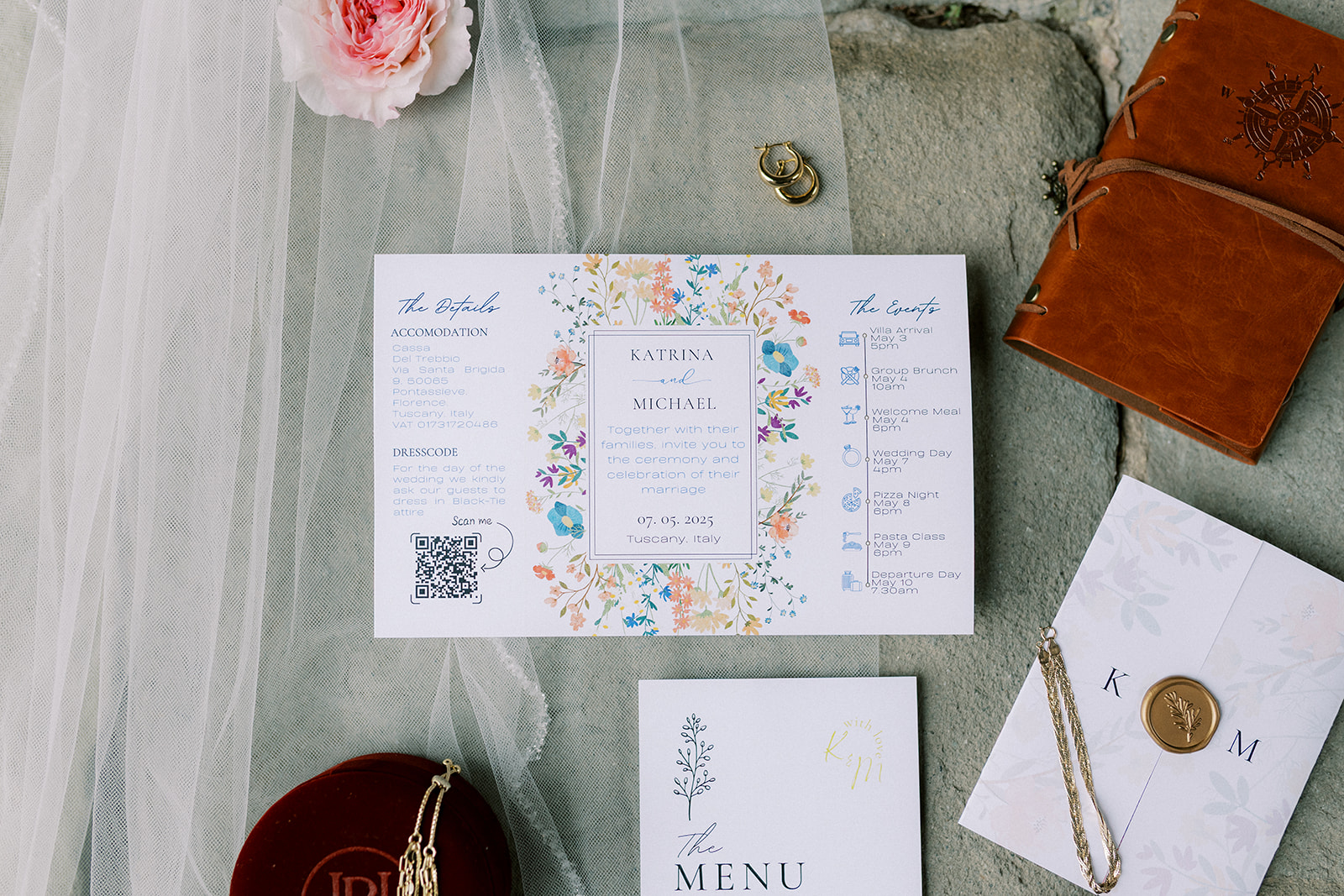
When planning a wedding—especially a destination wedding—creating a well-thought-out timeline is one of the most important steps to ensure your day flows seamlessly.
This becomes even more crucial when getting married abroad, in a country where weather conditions, temperatures, daylight hours, and local habits may be very different from what you are used to. In Italy, for example, sunrise and sunset times, summer heat, and venue regulations play a major role in how your wedding day should be structured.
A timeline is not just a schedule—it is the backbone of your entire wedding day.
Why a Draft Timeline Is Essential from the Beginning
Having a draft timeline from the very beginning of your planning journey is fundamental, especially when requesting quotations from vendors.
Each professional—photographers, musicians, planners, coordinators—bases their pricing on a specific number of working hours. One of the most common issues I see when working as a wedding coordinator is couples signing vendor contracts that cover fewer hours than their actual timeline requires. The result? Unexpected extra hours and unplanned expenses.
Even if you are working with a coordinator-only service, a preliminary timeline helps you make informed decisions and avoid surprises later on.
Weather, Heat, and Daylight: The Italian Summer Reality
If you are getting married in Italy, especially between June and September, you must consider how intense the summer heat can be.
In June, for example, sunset can be as late as 9:30 p.m. This means that at 3:00 or 4:00 p.m. the sun is still very high, temperatures are often extreme, and outdoor conditions may be uncomfortable—particularly in Southern Italy.
Imagine enjoying your aperitif at 4:00 p.m., under 40°C heat. In many Italian towns, shops actually close at that time because it is simply too hot. Prosciutto, cheeses, candles, and even your guests will not thank you for it.
Beyond comfort, there is also atmosphere to consider. Those romantic tables filled with candles, fairy lights, and soft lighting simply do not shine at 6:30 or 7:00 p.m. when the sun is still strong. The same applies to cold sparklers or cake-cutting moments—they lose their magic if it is still full daylight.
Photography and the Golden Hour
Photography timing is another key element when building your timeline.
The most beautiful light for couple portraits happens during the golden hour—approximately 45 minutes before sunset. This means you will need to step away with your photographer for at least 20–30 minutes during that time.
This moment must be planned very carefully so that:
• You do not miss important parts of your wedding day
• Your guests are not left waiting too long
• Aperitifs do not drag on endlessly
• Dinner service does not get delayed
A well-designed timeline balances stunning photography with a smooth guest experience.
Venue Curfews and Local Regulations
Another critical factor is the end time set by your venue.
Finishing at 11:00 p.m. is very different from finishing at 3:00 a.m., and this dramatically affects how you structure your day. In areas such as the Amalfi Coast or Lake Como, local regulations can be quite strict, requiring compromises and creative solutions.
Sometimes, thinking outside the box is the only way to:
• Capture golden hour photos
• Respect venue restrictions
• Still allow time for dinner, speeches, and dancing
This is where professional guidance truly makes a difference.
Choosing the Right Areas for Each Moment
Italian venues are often large and offer multiple areas for different moments of the day—ceremony, aperitif, dinner, cake cutting, and party.
However, not every beautiful spot is suitable at every time of day.
It is essential to know:
• Which areas are exposed to direct sun during the ceremony time
• Which spaces are shaded and comfortable for dinner
• Whether your chosen dinner area will still be under the sun
• How the light changes throughout the day
Nobody wants to eat dinner under the sun, watch candles melt, or sit uncomfortably in the heat. A planner who knows the venue and understands how light moves across the property can guide you toward the best choices.
Your Guests’ Experience Matters
While having a draft timeline early on is essential to avoid extra fees and logistical issues, the final timeline should be refined closer to the wedding date—once details such as speeches, first dances, performances, and special moments are fully defined.
When creating your final timeline, always consider:
• Vendor working hours
• Sunset and golden hour
• Venue curfews
• The comfort of each event area
• Photography needs
• Most importantly, your guests’ experience
Your wedding may be one of the most important days of your life, but it should also be a pleasant, joyful, and unforgettable experience for the people you love.
At the end of the day, it is your guests’ presence and love that make your celebration truly special.
If you are looking for professional guidance to plan your wedding in Italy, feel free to get in touch. I would be happy to help you create a timeline that is beautiful, realistic, and perfectly tailored to your day.